
After closing in 2002, the art-deco Bus Station required transformation to reposition the station as a digital and creative hub, retaining and celebrating the historic façade while promoting economic diversification in Cumbria, UK.

Challenge
Revitalizing a prominent heritage landmark meant carefully balancing preservation with the introduction of contemporary, flexible uses. The design needed to respond to post-Covid workplace expectations while embedding principles of equality, diversity, inclusion, and long-term sustainability throughout the building.
Solution
As part of the North Shore Innovation Quarter, we worked with BEC (Building Extraordinary Communities) to design a multi-use space that incorporates managed workspace, artisan food and beverage, and flexible workspaces with 24-hour access, digital suites, and co-located business support. Inclusive design ensures ease of movement, obstacle-free access, and welcoming spaces for all users. Sustainability strategies include natural ventilation, reusing existing structures, low-energy systems, solar integration with battery storage, and connection to a planned low-carbon electricity network.
Outcome
The development delivers a sustainable, creative hub that improves employment prospects and brings city-style start-up space to Cumbria’s coast. Achieving a BREEAM “Very Good” rating, it reduces environmental impact while supporting long-term adaptability and providing meaningful economic and social benefits to the local community.

An innovative direct-current lighting system works in tandem with on-site solar generation and battery storage to improve energy performance

A maker space, digital and prototyping suites, and co-located business support services create a city-style start-up ecosystem on the Cumbrian coast.

The building uses the site’s sloping topography to create street-level access on both floors
The restored curved Art Deco façade is paired with a contemporary addition, creating a dialogue between the building’s historic identity and its new role as a digital and creative hub.

Reusing the bus station reduced landfill waste and preserved a local landmark.


Reusing the bus station reduced landfill waste and preserved a local landmark.
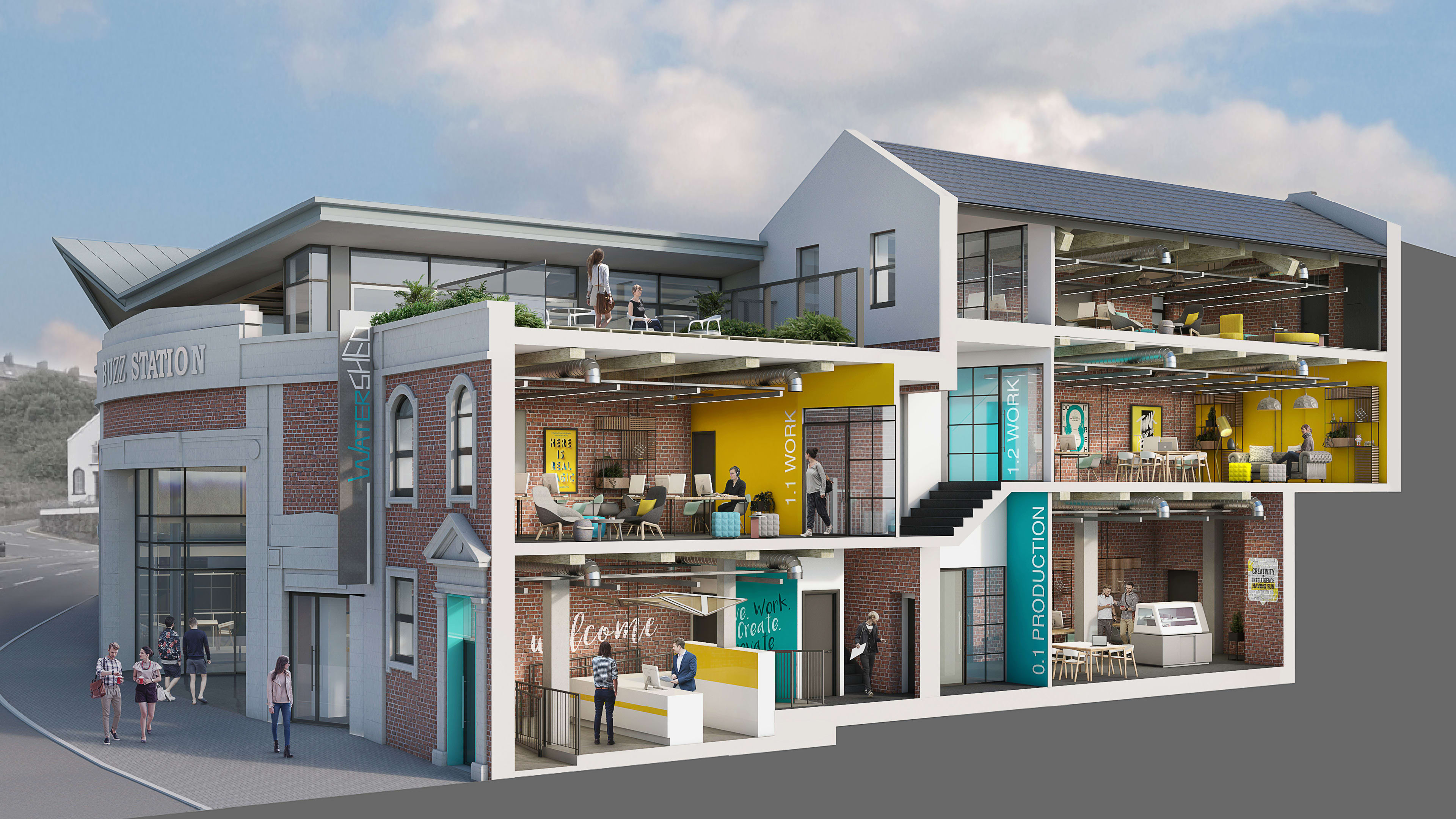
Forming an iconic gateway to Whitehaven in Cumbria, UK, the art-deco Bus Station required a transformation after closing in 2002. As part of the wider North Shore Development Quarter, NORR worked with the profit-for-purpose developer BEC (Building Extraordinary Communities) to transform the former bus station into Cumbria’s flagship digital and creative hub, utilizing the historic building fabric and breathing new life into the iconic public building. Recognizing the significance of the key visual landmark, the design was carefully crafted to retain and celebrate the curved brick façade while integrating an exciting contemporary form to offset and complement the historic form.
Comprised of managed and flexible workspace, artisan food and beverage offerings as well as a variety of bookable rooms and a maker-space facility, the multi-use Bus Station reflects the new requirements and nature of post-Covid office space. This development brings city-style start-up space to the coast of Cumbria with 24-hour access, digital and prototyping suites and co-located business support services courtesy of Barclay’s Eagle Labs. The design, from the earliest conception, engrained the principles of equality, diversity, and inclusion, working with the challenging building layouts to maximize access for all. The proposed floor plans create free movement into and around the Bus Station, with ease of entry, obstacle free access and using the sloping topography setting to permit street level entry to both ground and first floors. Parking spaces are fully accessible together with EV charging provision. Careful consideration to design helps aid visibility and inclusion across a wide spectrum. The building is welcoming and inviting to all people regardless of age, ability levels, background, religion, or ethnicity and provides a dining room for the town while enriching the flexible workplace.
The design achieved a BREAAM Very Good rating and beyond this was further enhanced by using natural ventilation wherever possible, sustainable construction materials, good levels of insulation, air tightness, low energy use heating and lighting and carefully considered acoustic performance. The innovative Direct Current (DC) lighting system is more efficient at using the solar power generated on-site by the PV panels. Future connectivity to a planned low carbon electricity network gives the project adaptability. The reuse of the existing offices prevented huge quantities of waste materials going to landfill and the most appropriate low carbon technologies were installed throughout supported by additional battery storage powered from the solar array. This sustainable, creative, and flexible multi-use space helps improve employment prospects in Cumbria and delivers tangible benefits for the local community.
