
Supported in part through State of Michigan Capital Outlay funding, Wayne State University identified an opportunity to create a hub for interdisciplinary teaching, learning, and innovation for undergraduate STEM students in Detroit, MI.
Challenge
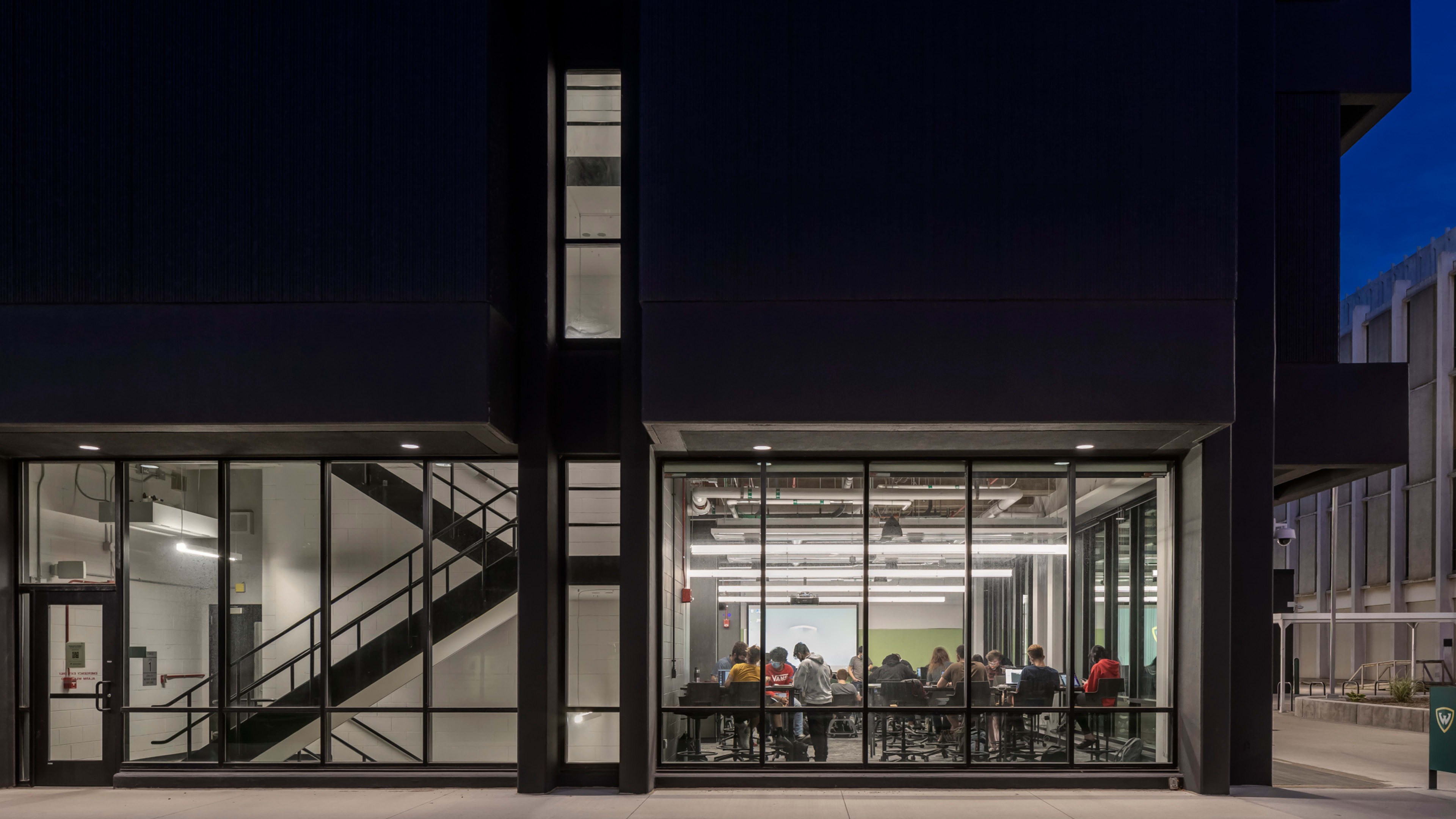
Preparing students for an increasingly interdisciplinary workforce required reimagining an underutilized academic building as a collaborative, technology-rich destination for STEM education. The facility needed to transform a vacant science and engineering library into an enhanced instructional environment that supports a wide range of learning, research, innovation, and faculty functions within a cohesive setting.
Solution
Our team designed a next-generation facility within the existing 116,457-square-foot Science and Engineering Library building. The program integrates interdisciplinary classroom laboratories, innovation labs, hackerspaces and makerspaces, collaborative learning environments, and dedicated academic spaces. Together, these elements support active learning, technical skill development, research, and cross-disciplinary engagement.
Outcome
Achieving LEED® Gold certification, the project repurposes an underutilized campus asset into a high-performance learning environment designed for long-term operational efficiency. The transformation strengthens STEM education, supports workforce development, and equips students with the skills and experiences needed to contribute to future technological advances and scientific discoveries.

Open “third spaces” encourage study, discussion, and informal learning
Educational displays bring STEM subjects into the everyday student experience
Designed in close collaboration with students and faculty, the repurposed facility responds directly to the evolving needs of STEM education.
Dedicated hackerspaces and makerspaces provide hands-on learning opportunities rarely found in traditional instructional settings.


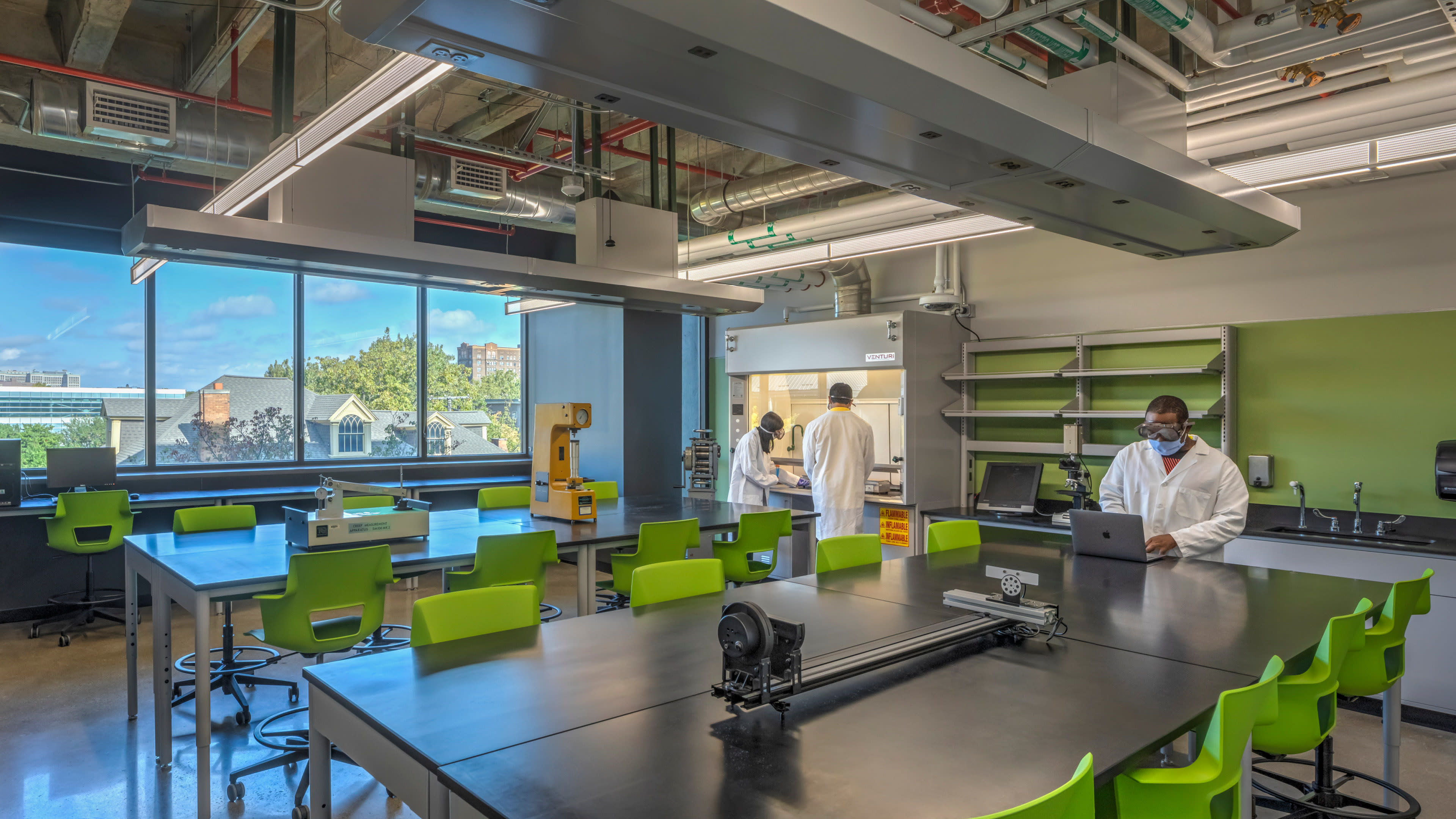
Hands-on learning is integrated throughout the facility’s STEM curriculum

Bright interiors and informal seating encourage interaction beyond the classroom
Wayne State University, a public research university in Detroit, MI, realized an opportunity, and a need, to create a hub for interdisciplinary teaching, learning and innovation for undergraduate STEM (science, technology, engineering and math) students. The project is a State of Michigan Capital Outlay Project, meaning a portion of the $47.5M USD project will be funded by the state. With government funding to support the initiative, the vision is to create an enhanced instructional environment that will invest in workforce development to meet future technical talent demands.
NORR worked in close collaboration with Wayne State students and faculty to design a next-generation facility in its vacant 116,457 square-foot Science and Engineering Library building at the midtown campus. The program elements are fully integrated and include:
- Classroom laboratory spaces that provide interdisciplinary learning environments such as active learning spaces, technology-rich scientific and computer laboratories and seminar spaces
- Innovation labs, which will give students interdisciplinary exposure to skill set development that are not possible in most instructional settings
- Hackerspace/Makerspaces that allow common interest gathering for computer science students who are involved with coding, gaming, 3D graphics, etc., collaborating with other technical type students.
- Collaboration or “third” spaces where students can gather before and after class, to study, continue interdisciplinary discussion or have a conversation with their faculty instructor
The project achieved LEED Gold Certification. Through architecture, engineering and construction, the design supports materials and systems that provide current and long-term operational efficiencies. The design transformed the former underutilized building to an enhanced purpose that supports education, research and careers, with the objective of putting graduating students at the forefront of technological advances and scientific discoveries in the STEM-based workforce.
